
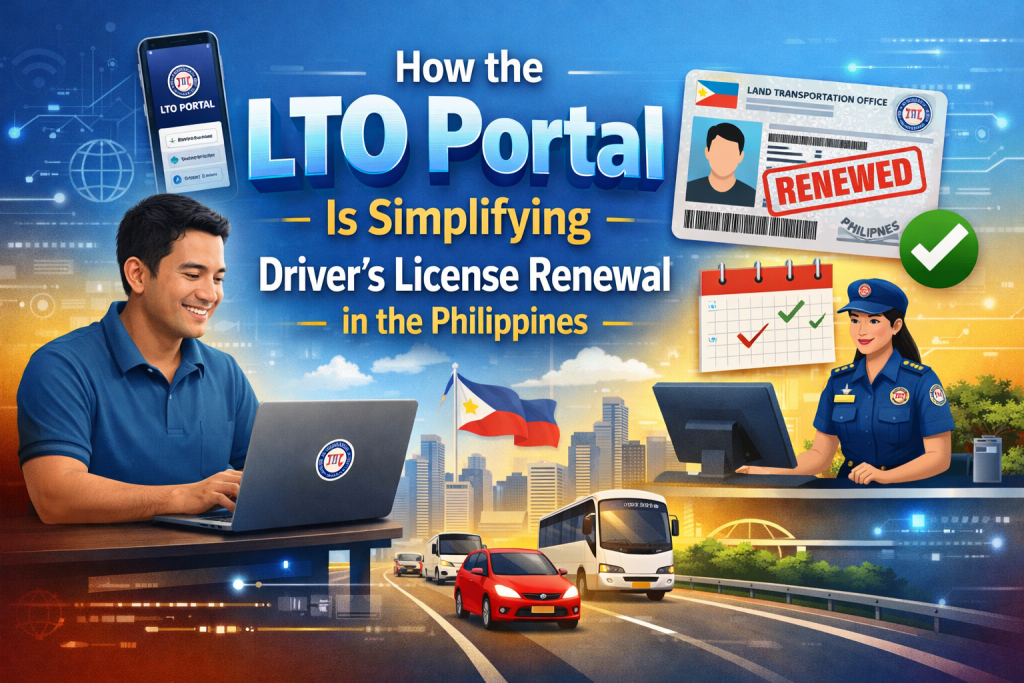
How the LTO Portal Is Simplifying Driver’s License Renewal in the Philippines
For many Filipino drivers, renewing a driver’s license used to feel like a test of patience rather than a simple government service. Long lines, unclear instructions, repeated visits, and wasted workdays were all part of the experience. People often braced themselves for an entire day at the LTO office—sometimes even longer—just to complete a renewal.
That frustration is exactly why the LTO Portal matters.
The shift to a digital system didn’t magically fix everything overnight, and yes, there are still rough edges. But for the first time, drivers have real control over the renewal process. You can prepare in advance, understand what’s required, and reduce unnecessary trips offering something that feels rare in public services: predictability.
This article breaks down how the LTO Portal is simplifying driver’s license renewal in the Philippines, where it succeeds, where it still struggles, and how drivers can make the most of it.
What Is LTO Portal?
LTO Portal is the official online platform designed to manage driver-related services digitally. Instead of relying entirely on in-person transactions, the portal allows drivers to handle key steps online—before ever setting foot inside an LTO office.
At its core, the portal acts as a personal dashboard. Once registered, drivers can access their license records, complete required exams, submit information, and track their renewal status. It centralizes what used to be scattered across different counters, forms, and offices.
What makes this important isn’t just convenience. It’s consistent. Everyone sees the same requirements, follows the same steps, and receives the same instructions. That alone removes a lot of confusion that used to cause delays and repeat visits.
The portal doesn’t eliminate face-to-face interaction completely, but it reduces it to what actually matters.
Problems With Traditional Driver’s License Renewal
Before the LTO Portal, renewal followed a familiar pattern—and not a pleasant one.
Drivers often showed up early, only to discover missing requirements. Others waited hours just to be told to return another day. Information varied depending on who you asked. Some people relied on hearsay or outdated advice, which made things worse.
Common problems included:
- Long queues and overcrowded offices
- Manual paperwork that slowed processing
- Unclear renewal steps and changing requirements
- Multiple visits for medical exams, payments, and verification
- Lost time, especially for working drivers and OFWs on short visits
The system worked, but barely. It demanded time and energy rather than efficiency. Many drivers accepted this as “normal,” even though it clearly didn’t have to be.
Step-by-Step: How License Renewal Works Through the LTO Portal
The biggest advantage of the LTO Portal is clarity. You know what comes next before you even begin.
First, drivers create an online account. This step alone replaces manual record checking and allows the system to recognize your license history.
Next, required exams are completed online. Instead of sitting in crowded rooms, drivers can take these assessments at home. It’s not perfect—technical hiccups happen—but it’s a massive improvement over the old method.
After that, drivers upload or submit necessary information. Medical certificates are often integrated digitally, removing another physical stop.
Payment options are provided, allowing drivers to settle fees without lining up at cashiers. Once payment is confirmed, the system guides the driver to the final step—usually a scheduled visit to complete biometrics or receive the license.
The process feels structured. You’re not guessing anymore.
Key Features That Make License Renewal Easier
Several features of the LTO Portal directly address long-standing pain points.
Online exams allow drivers to complete requirements without travel. Appointment scheduling reduces walk-in congestion and helps drivers plan their day. Digital records mean fewer errors and faster verification.
Another underrated feature is real-time status updates. Drivers can see where they are in the process, which eliminates uncertainty. You’re not left wondering if your application was lost or delayed.
It’s not flashy technology—but it’s practical. And that’s what matters most.
Benefits for Different Types of Drivers
Not all drivers have the same needs, and the portal quietly adapts to that.
For working professionals, fewer office visits mean less time off work. For senior citizens, clearer steps reduce confusion and stress. For OFWs, the ability to prepare online before returning home is a huge relief.
Professional drivers benefit from quicker processing, while non-professional drivers appreciate the simplicity. The system doesn’t favor one group over another—it standardizes the experience.
That fairness builds confidence.
Impact on LTO Offices and Public Service Efficiency
The portal doesn’t just help drivers. It helps the LTO itself.
With fewer walk-ins, offices can manage crowds better. Staff spend less time answering repetitive questions and more time processing actual transactions. Errors are reduced because information is entered by drivers themselves.
The result is a quieter, more organized environment. It’s not perfect yet, but it’s noticeably better than before.
Public service works best when systems support the people running them—not overwhelm them.
Transparency, Security, and Trust in the LTO Portal
Trust is a big issue in any digital government service. Drivers want to know their data is safe and their payments are properly recorded.
The LTO Portal improves transparency by showing clear fees, requirements, and progress updates. There are fewer “surprise” charges or unexplained delays.
Security measures are in place, though like any online system, it relies on users protecting their own login details. Trust grows when people see consistency—and the portal is slowly earning that trust.
Common Issues and Limitations of the LTO Portal
Let’s be honest. The portal isn’t flawless.
Some users experience slow loading times. Others struggle with registration or password recovery. Internet access remains a barrier for drivers in remote areas.
There are also moments when online systems and physical offices don’t sync perfectly, causing confusion. These issues can be frustrating, especially when expectations are high.
But imperfections don’t cancel progress. They highlight where improvements are still needed.
Tips to Maximize the LTO Portal Experience
Preparation makes everything smoother.
Create your account early. Double-check your personal details. Complete online exams ahead of time. Save digital copies of important documents.
If something doesn’t work right away, try again later rather than rushing to an office. Patience still matters—but much less than before.
Most importantly, follow instructions exactly as shown on the portal. Small mistakes cause the biggest delays.
The Future of Driver’s License Services in the Philippines
The LTO Portal is a starting point, not the final destination.
As systems improve, more services will likely move online. Full renewals without office visits may eventually become possible. Integration with other government platforms could further simplify processes.
Change won’t happen overnight. But the direction is clear—and it’s forward.
Digital public services aren’t about removing people. They’re about removing friction.
FAQs
Is the LTO Portal mandatory for license renewal?
It is increasingly becoming the standard method, especially for renewals.
Can senior citizens use the portal easily?
Yes, though assistance from family members can help with registration.
Does online renewal mean no office visit at all?
Not always. Some steps still require physical presence.
What if the portal is down?
Temporary outages happen. Trying again later usually resolves the issue.
Is the information on the portal reliable?
Yes. It reflects official requirements and procedures.
Conclusion
The LTO Portal doesn’t just simplify driver’s license renewal—it changes how drivers experience public service.
It replaces uncertainty with structure, stress with preparation, and wasted time with clarity. It’s not perfect, and it doesn’t pretend to be. But it proves that government services can evolve without losing accountability.
For Filipino drivers, that shift matters. Renewal no longer feels like a burden you dread—it feels like a process you can manage.
And that alone is real progress.